Sandbags might be the most underrated piece of training gear you can own. They’re cheap compared to a rack of dumbbells, they carry easily, and the shifting weight forces your core and stabiliser muscles to work in a way fixed weights never do. Whether you want to build functional strength, add resistance to your rucking, or throw together a full-body workout in the garage, a good sandbag does it all.
The catch is that they’re not all built the same. Prices swing from around $50 to well over $150, durability varies a lot, and the “right” bag really depends on how you train and what you’re willing to spend. Below we break down the best workout sandbags across every budget, so you can pick the one that fits.
What to look for in a workout sandbag
Before the picks, here’s what actually matters when choosing one.
Material. The best bags use 1000D Cordura, a heavy-duty fabric built to survive being dropped, dragged, and slammed. Cheaper bags use thinner material that wears out faster.
Filler bags. Good sandbags hold the sand in an inner filler bag rather than loose in the shell. This protects the zipper, stops leaks, and lets you adjust the weight quickly.
Handles. More handles mean more exercise options: cleans, presses, rows, carries. Some bags have two, others have seven or eight.
Weight range. Think about how heavy you’ll actually train. Some bags start light for beginners; others climb past 100 lbs for serious strongman work.
Price and warranty. This is where the biggest differences show up, and where it’s worth being honest about what you’re paying for.
Summary: Look for 1000D Cordura, an inner filler bag, enough handles for the exercises you want, a weight range that fits your training, and a price that matches how hard you’ll use it.
Best value: Polyfit Classic Sandbag
For most people getting into sandbag training, the Polyfit Classic Sandbag hits the sweet spot of quality and price. It comes in three sizes: Small (10–50 lbs capacity, $49.99), Medium (30–75 lbs, $59.99), and Large (up to 125 lbs, $69.99), so you can match it to your strength and goals.
What makes it stand out is the value. At $49.99 to start, it’s comfortably the most affordable serious sandbag here, well under the $85+ you’ll pay for the premium brands, while still giving you the adjustable weight range and multi-handle design that make sandbag training so versatile. For anyone who wants to try sandbag work without a big outlay, or who wants a capable bag for rucking and home workouts, it’s the easiest one to recommend.
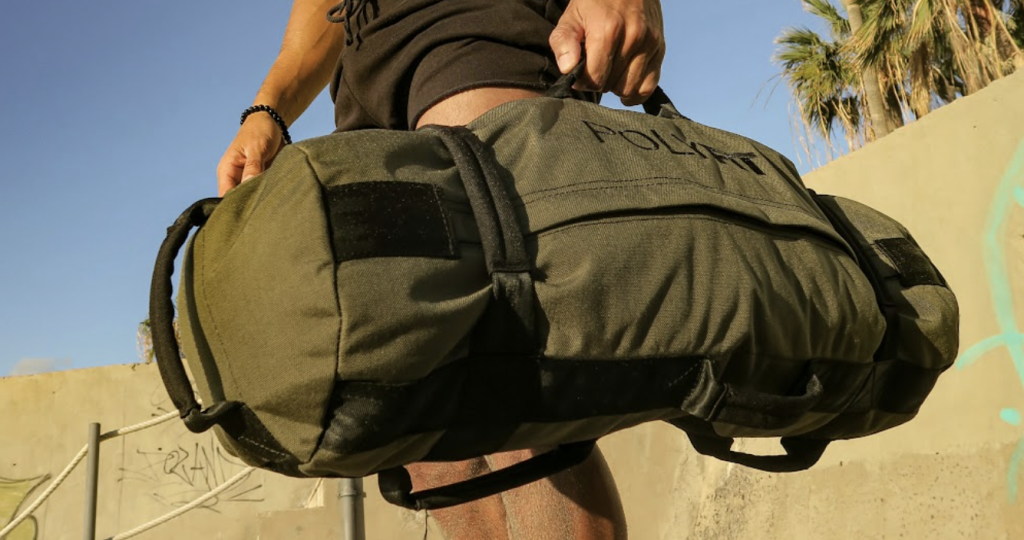
Check out the Polyfit Classic Sandbag (link to getpolyfit.com)
Summary: The best pick for most people. Adjustable weight ranges, three sizes, and a starting price well below the premium brands. Ideal for beginners, rucking, and home training.
Best for CrossFit-style training: Polyfit Pro Sandbag
If you’re doing structured, repeatable workouts, CrossFit, strength programming, or any training where you need to know exactly what you’re lifting, the Polyfit Pro Sandbag solves a problem the others don’t. Instead of a weight range you fill yourself, it comes in exact fixed sizes: 40, 60, 80, and 100 lbs, priced from $54.99 to $79.99.
That fixed weight matters more than it sounds. When you’re tracking progress or following a program, “60 lbs” needs to mean 60 lbs every session, not “somewhere between 30 and 75 depending on how I filled it.” The Pro gives you that consistency, which makes it the better choice for serious, standardised training, while still coming in below premium-brand pricing.
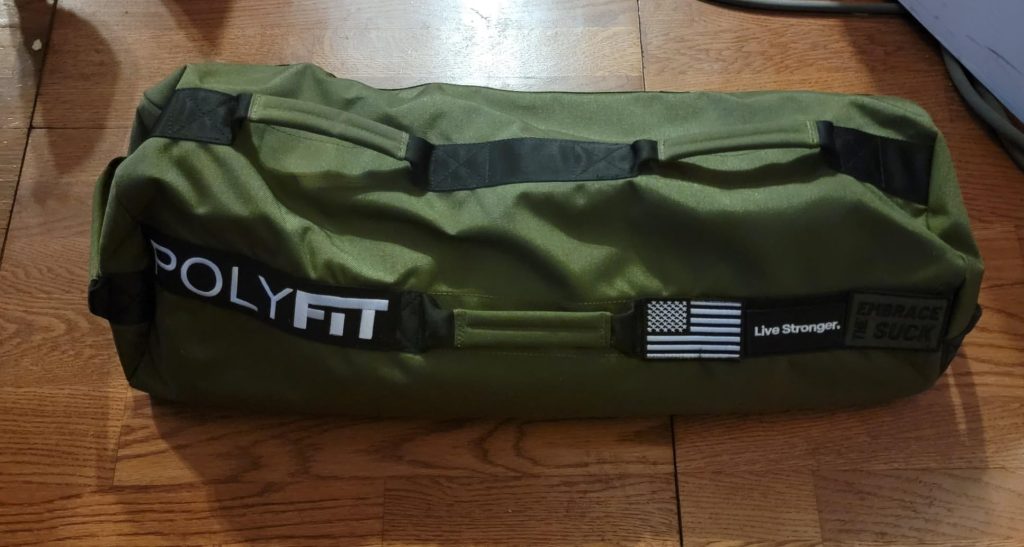
Check out the Polyfit Pro Sandbag (link to getpolyfit.com)
Summary: The pick for CrossFit and structured programs. Fixed weights (40/60/80/100 lbs) mean you always know exactly what you’re lifting, at a price still below the premium options.
Best premium: GORUCK Sandbag
If you want a bag that will outlast you and don’t mind paying for it, the GORUCK Sandbag is the gold standard. Built from 1000D Cordura with YKK zippers and heavily reinforced, padded handles, it’s famously tough, the kind of bag people slam and drag for years without it wearing out. It comes in sizes from 20 to 120 lbs, priced from around $85 to $165, and it’s backed by GORUCK’s lifetime guarantee.
That warranty is the real draw: if it ever fails outside of misuse, GORUCK replaces it, no questions asked. You pay a clear premium over Polyfit, but for someone who trains hard and wants buy-it-for-life gear, it’s a fair trade.
Summary: The most durable option, with a lifetime guarantee. Expect to pay $85–$165, a real premium, but for heavy, long-term use it’s built to never quit.
Also worth knowing: Rogue, Brute Force and REP
A few other brands come up often, and they’re all solid, just positioned differently:
Rogue Fitness makes excellent, USA-made bags with a 3-year warranty and seven handles, but they’re among the priciest on the market (their comparable bags start around $130).
Brute Force offers great versatility with up to eight handles and tough MIL-spec Cordura, sitting in the mid-to-upper price tier. A favourite for people who love switching up movements.
REP Fitness is another good-value option, with soft-grip handles and prices from around $39.99 to $89.99, though its warranty terms are stricter on slamming and dragging.
Summary: Rogue is premium and built to last but expensive; Brute Force is versatile and tough at a mid-high price; REP is good value with some usage limits. All solid, depending on your priorities.
Which sandbag should you buy?
Here’s the honest bottom line.
For most people, the Polyfit Classic gives you everything you need to start training, for the least money. If you do CrossFit or follow a structured program, the Polyfit Pro’s fixed weights make tracking effortless. If you want premium, buy-it-for-life durability and don’t mind the price, the GORUCK is the tank of the group.
Match the bag to how you actually train and what you’ll realistically spend, and any of these will serve you well. New to training with one? Pair it with your rucking, our guide on how to start rucking is a good place to begin.