Ever stood in your hallway, looking at a loaded rucksack on one side and a weighted vest on the other, wondering which one will actually get you fitter? You’re not alone. It’s one of the most common questions we hear from people getting into weighted training, and the honest answer is: it depends on what you’re chasing.
Both load your body with extra weight. Both build strength and endurance. And both beat sitting on the couch. But they feel different, they train your body in slightly different ways, and one of them might suit your goals far better than the other.
In this guide we’ll break down how rucking and weighted vest training really compare, where each one shines, and how to pick the right tool for the job.

What’s the Difference Between Rucking and Weighted Vest Training?
Let’s clear this up first, because the two often get lumped together.
Rucking means walking with weight carried in a backpack (a rucksack), sitting high on your back and supported by your shoulders and hips. The load sits behind you, which shifts how you balance pulling your posterior chain into the work as you walk.
Weighted vest training means wearing a vest with the weight spread evenly across your torso, front and back. The load sits close to your center of gravity and stays snug against your body, so it moves with you instead of pulling backward.
That difference in where the weight sits sounds small, but it changes how each one feels and what it does for your body. Here’s the quick version:
| Rucking (Rucksack) | Weighted Vest |
| Weight sits high on the back | Weight spread evenly across torso |
| Best for endurance & distance | Best for workouts & versatility |
| Loads the posterior chain | Loads the whole body during movement |
| Needs a pack and weight | Minimal, quick to throw on |
| Built for the outdoors | Better for mixed or indoor training |
People often pick one over the other based on a single goal, but the truth is they overlap a lot. So let’s go through the areas that actually matter and see how they stack up.
Rucking vs Weighted Vest: Head-to-Head
1- Building Muscle and Strength
Rucking leans on your legs, glutes, lower back, and shoulders, all working together to carry a load over distance. Because the weight sits high and behind you, your posterior chain (the muscles running up the back of your body) does a lot of the work, and your core fires constantly to keep you upright and balanced.
A weighted vest, on the other hand, keeps the load tight to your body, which makes it brilliant for adding resistance to bodyweight movements. Push-ups, squats, lunges, pull-ups, step-ups: throw on a vest and every rep gets harder.
The weight doesn’t pull you off balance, so you can move fast and train explosively.
Summary: If your goal is loaded endurance and a strong posterior chain, rucking wins. If you want to add resistance to workouts and bodyweight exercises, the vest is the better tool.
2- Cardio and Endurance
This is where rucking really comes into its own. Walking for 30, 60, or 90 minutes with weight on your back keeps your heart rate in that steady aerobic zone, the kind of effort you can hold for a long time. It’s low-impact, sustainable, and builds the sort of engine that carries over to hiking, long days on your feet, and general stamina.
A weighted vest can absolutely spike your heart rate, especially during circuits or interval work, but it’s less suited to the long, steady efforts that build deep aerobic endurance. Most people wear a vest for shorter, sharper sessions rather than hour-long walks.
Summary: For long, steady endurance, rucking is hard to beat. For short, intense cardio bursts, the vest does the job.
3- Joint Impact and Comfort
Both are far easier on your joints than running, which is a big reason people turn to weighted walking in the first place. But there are differences worth knowing.
With rucking, the weight pulls back and down, so a poorly packed bag or too much weight too soon can put strain on your shoulders and lower back. The fix is simple but makes all the difference: keep the heaviest items high and close to your spine, and cinch the straps tight so the load sits snug against your center of gravity rather than swinging behind you. We’ve felt this firsthand on long mountain treks: a pack that’s loaded well almost disappears on your back, while a badly packed one will wreck your shoulders within the hour.
A weighted vest spreads the load evenly and keeps it centered, which many people find more comfortable for movement-based training, though a heavy vest can press on your shoulders during longer sessions.
Summary: Both are joint-friendly. Rucking needs smart packing to stay comfortable; the vest spreads weight more evenly but can feel heavy on the shoulders over time.
4- Convenience and Versatility
A weighted vest wins on convenience, no question. You throw it on and you’re training, whether that’s a walk, a workout, or just doing chores around the house. It’s compact and quick.
Rucking takes a little more setup (a pack, something to load it with) but it shines outdoors! It turns any walk, trail, or commute into a workout, and it scales easily: add or remove weight, go further, walk faster. It’s also a brilliant social activity, something you can do with friends for hours.
Summary: The vest is the more convenient, versatile choice for mixed training. Rucking is the better fit if you love being outdoors and want your walks to count.
When Should You Choose a Weighted Vest?
A weighted vest is the right call if you want to:
- Add resistance to bodyweight workouts (push-ups, squats, pull-ups, lunges)
- Train indoors or in a small space
- Keep things quick and grab-and-go
- Do shorter, higher-intensity sessions
If that sounds like you, it’s worth choosing a vest that fits snugly, stays comfortable during movement, and matches the type of training you plan to do.
The Polyfit Fortify Vest is a comfortable, beginner-friendly option that offers many of the benefits of premium weighted vests without the premium price tag. Its compact fit helps keep the weight secure and stable during walks, rucks, stair climbs, and everyday training.

Learn more about the Polyfit Fortify Weighted Vest, or check the latest price for the Polyfit Fortify weighted vest directly on Amazon.
If you want more flexibility as your fitness improves, the Polyfit Warrior Vest allows you to easily add or remove weight, making it simple to increase resistance over time without purchasing another vest. It’s a great option for athletes who want a vest that can grow with them.
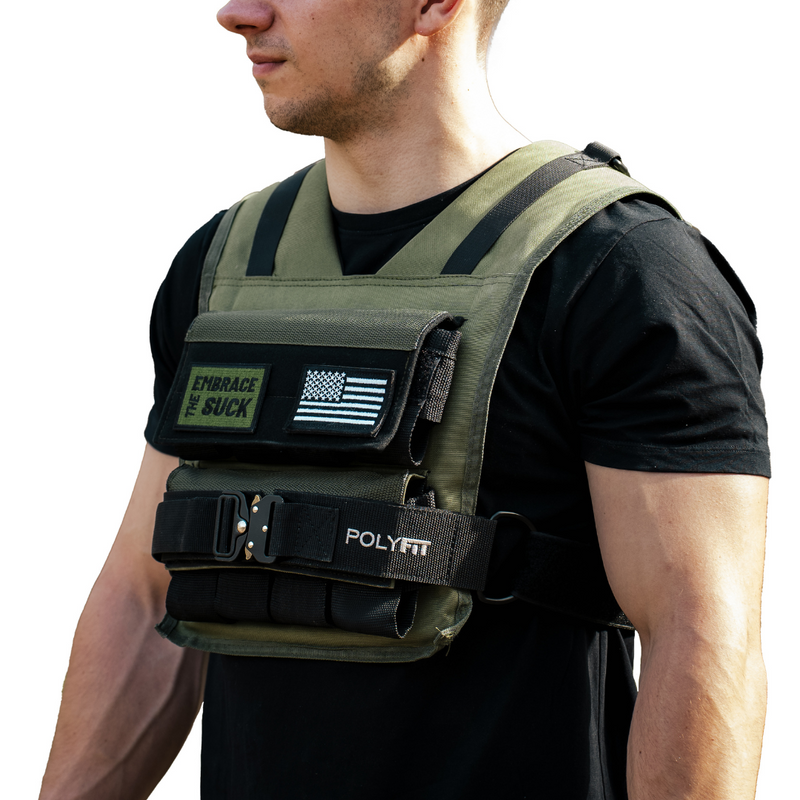
Learn more about the Polyfit Warrior Weighted Vest, or check the latest price for the Polyfit Warrior Vest directly on Amazon
If you’re planning to use your weighted vest specifically for rucking, our guide on weighted vests for rucking will help you choose the right vest for your goals, budget, and training style.
When Should You Choose Rucking (and a Rucksack)?
Rucking is the better choice if you want to:
- Build long, steady aerobic endurance
- Spend more time outdoors
- Turn walks, hikes, and commutes into training
- Strengthen your posterior chain under load
Unlike a weighted vest, a rucking backpack places the weight on your back, which more closely mimics hiking and real-world load carrying. It’s one of the simplest ways to add challenge to your daily walks while building endurance, strength, and work capacity at the same time.
The good news is that you don’t need to spend a fortune to get started. A purpose-built rucking pack can make a big difference in comfort, stability, and weight distribution, but there are plenty of beginner-friendly options that cost far less than premium brands. The Polyfit Rucking Backpack is a comfortable, affordable option designed specifically for weighted walking and rucking.
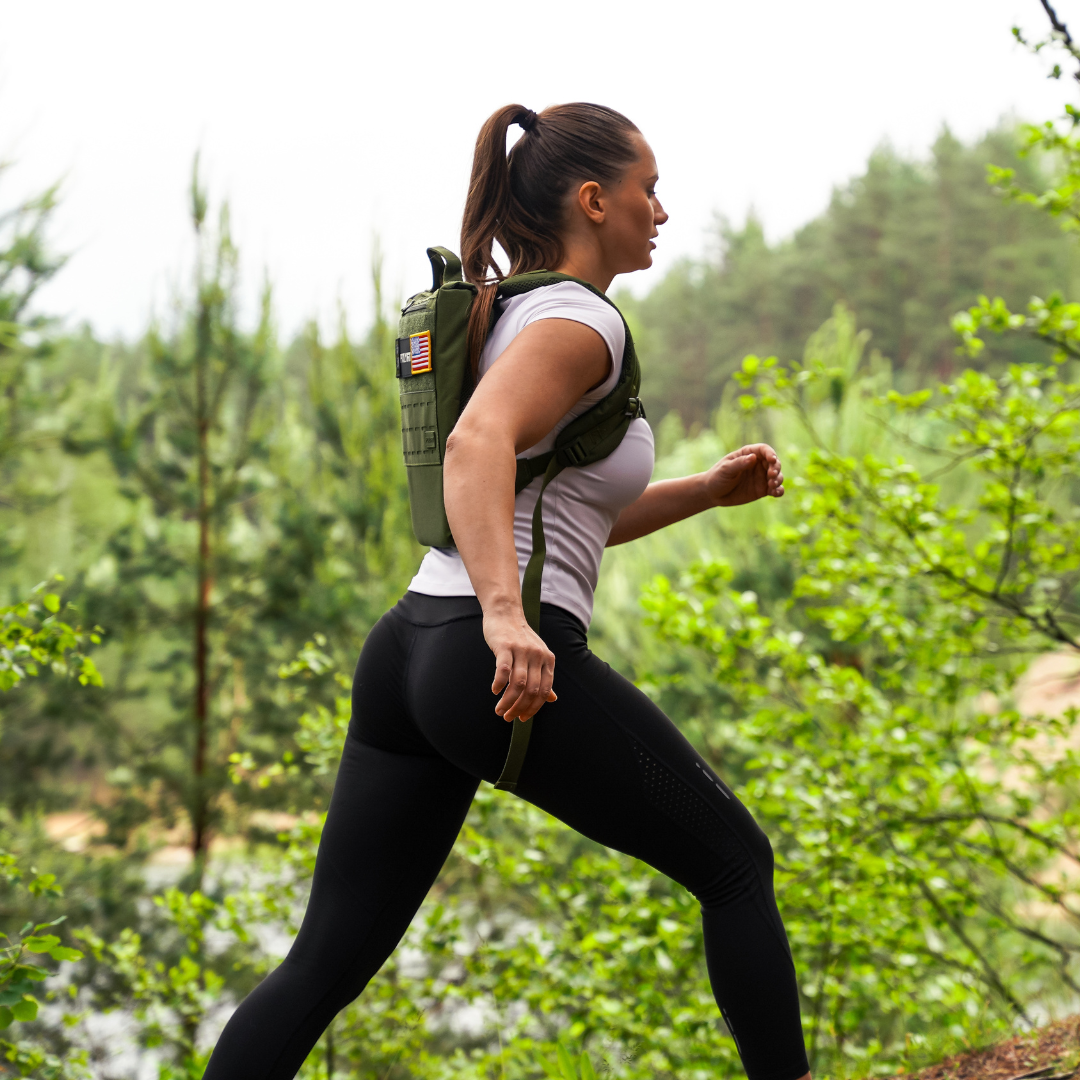
Learn more about the Polyfit Rucking Backpack, or check the latest price for the Polyfit rucking backpack directly on Amazon.
If you’re brand new to this, our guide on rucking for beginners walks you through the basics, and how much weight to carry when rucking will help you load up safely.
Can You Use Both?
Here’s the thing most comparisons miss: it’s not really an either/or. A lot of people use both, depending on the day and the goal.
Use the rucksack for your longer outdoor walks and endurance days. Use the vest for your strength sessions, circuits, and quick workouts when you’re short on time or stuck indoors. Together they cover just about every angle of weighted fitness, endurance, strength, and convenience, without you having to pick a side. If you want a deeper look at the cardio side of things, our rucking vs running comparison is worth a read too.
The Verdict
So, rucking or weighted vest? Here’s our honest take.
If your main goal is endurance, time outdoors, and a strong posterior chain, a rucking backpack is the winner, and it scales with you for years. If your goal is adding resistance to workouts, training indoors, or keeping things quick and convenient, a weighted vest is the smarter buy.
But if you can swing it, owning both gives you the most complete setup. They’re not rivals so much as teammates: one builds the engine, the other builds the strength. And there’s a quiet reward waiting either way: after a long day carrying a heavy load, the moment you finally take it off, you feel like you could float away! That lightness is your body telling you it just did real work.
Pick the one that matches your main goal today, and add the other when you’re ready to round things out!

Frequently Asked Questions
Is a weighted vest as effective as rucking? It depends on the goal. For long, steady aerobic endurance, rucking is more effective because you can sustain it for a long time. For adding resistance to bodyweight workouts and shorter sessions, a weighted vest is just as effective, often more so. They train slightly different things, so the “better” option is the one that matches what you’re after.
How much weight should I start with? A good starting point for most people is around 10% of your bodyweight, whether in a rucksack or a vest. Start light, focus on good posture, and build up gradually. You can always add more once your body adapts, our guide on how much weight to carry when rucking goes into detail.
Can you build muscle with a weighted vest or rucking? Both add resistance, which helps maintain and strengthen muscle, especially in your legs, core, and posterior chain. That said, neither replaces dedicated strength training for serious muscle growth. Think of them as tools that build functional strength and endurance rather than maximum size.
Which is better for losing weight? Both burn more calories than walking or training unloaded, so both can help with fat loss when paired with a sensible diet. Rucking tends to burn more over long sessions simply because you do it for longer, while a weighted vest can raise the intensity of shorter workouts.